Maintenance Tips for Artificial Turf: Do’s and Don’ts

Artificial turf has become a popular choice for schools, clubs, stadiums, and residential spaces. Yet many struggle to maintain its durability and appearance throughout the year.
In this detailed guide, you’ll learn the essential do’s and don’ts that keep your turf fresh, safe, and long-lasting.
We’ll explore expert-backed care methods, mistakes to avoid, and how PFS Sport delivers premium Artificial Turf systems designed for easy, low-cost maintenance.
Maintenance Tips for Artificial Turf: Do’s and Don’ts
Artificial turf offers superior playability, impressive aesthetic appeal, and reduced long-term costs. However, maintaining it the right way ensures your investment continues to perform for many years. Schools, clubs, and sports facilities using PFS Sport products enjoy advanced turf systems engineered for durability with minimal upkeep. Still, following proper guidelines is essential for consistent performance.
Why Maintenance Matters for Artificial Turf
Proper turf care increases its lifespan, enhances safety, and keeps the surface visually appealing. Even though Artificial Turf requires less upkeep than natural grass, regular maintenance ensures even infill distribution, proper drainage, and effective hygiene—especially on busy sports grounds.
Modern systems provided by PFS Sport are designed with UV-resistant fibers, shock-absorbing bases, and high-grade infills that respond well to routine cleaning and grooming.
Do’s of Artificial Turf Maintenance
Keeping your turf in excellent condition requires consistent care. Below are the essential actions that ensure long-term performance.
1. Brush the Turf Regularly
Regular brushing helps maintain an even playing surface. It keeps turf fibers upright and prevents matting, which is common in areas with heavy foot traffic.
How Often to Brush
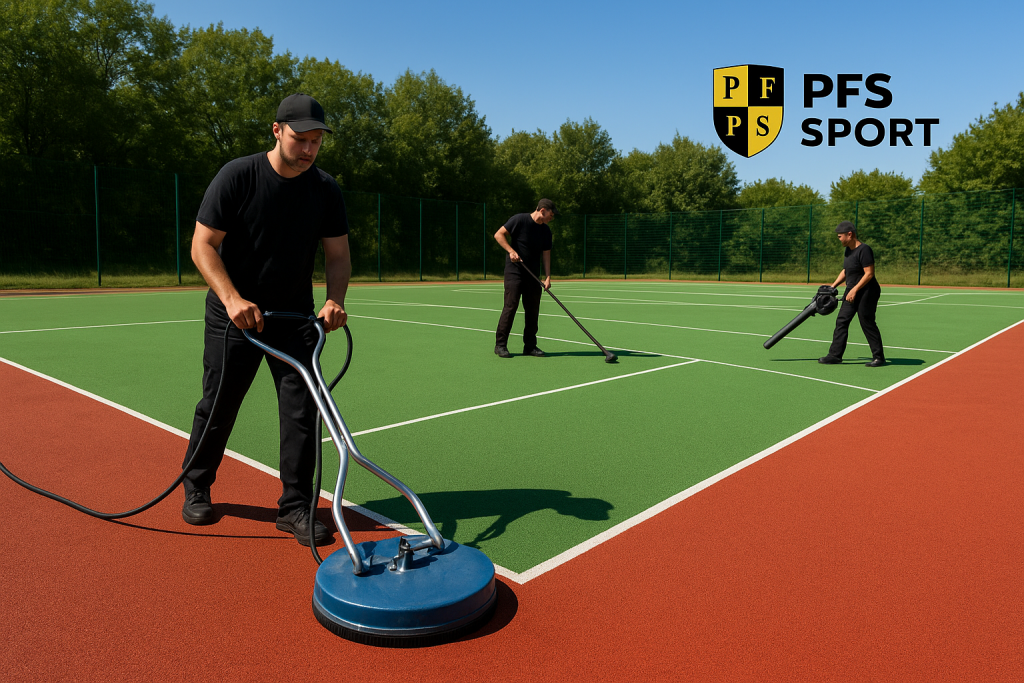
Brush once every 1–2 weeks for moderate use and 2–3 times a week for sports facilities. PFS Sport recommends soft, non-metal bristle brushes to avoid fiber damage.
2. Clean Debris Promptly
Leaves, twigs, food waste, and other debris block drainage and promote bacterial build-up.
Best Practices
Use a blower or light rake to clear the turf periodically. Avoid metal rakes as they may damage the turf backing.
3. Rinse the Surface Occasionally
Rinsing removes dust, pollen, and contamination. It also restores freshness after heavy usage.
When to Rinse
Once a month is usually enough, but high-traffic areas may require weekly rinsing.
4. Maintain Infill Levels
Infill plays a huge role in cushioning, traction, and fiber stability on Artificial Turf.
PFS Sport Recommendation
Check infill depth every month. If you notice compaction or uneven distribution, groom and redistribute it for consistent performance.
5. Address Stains Quickly
Sports facilities often deal with accidental spills or stains. Cleaning them immediately avoids long-term discoloration.
Safe Cleaning Agents
Mild soap, warm water, and soft cloths work best. Never use strong chemicals.
6. Use Proper Equipment
Using the right tools ensures the longevity of the turf.
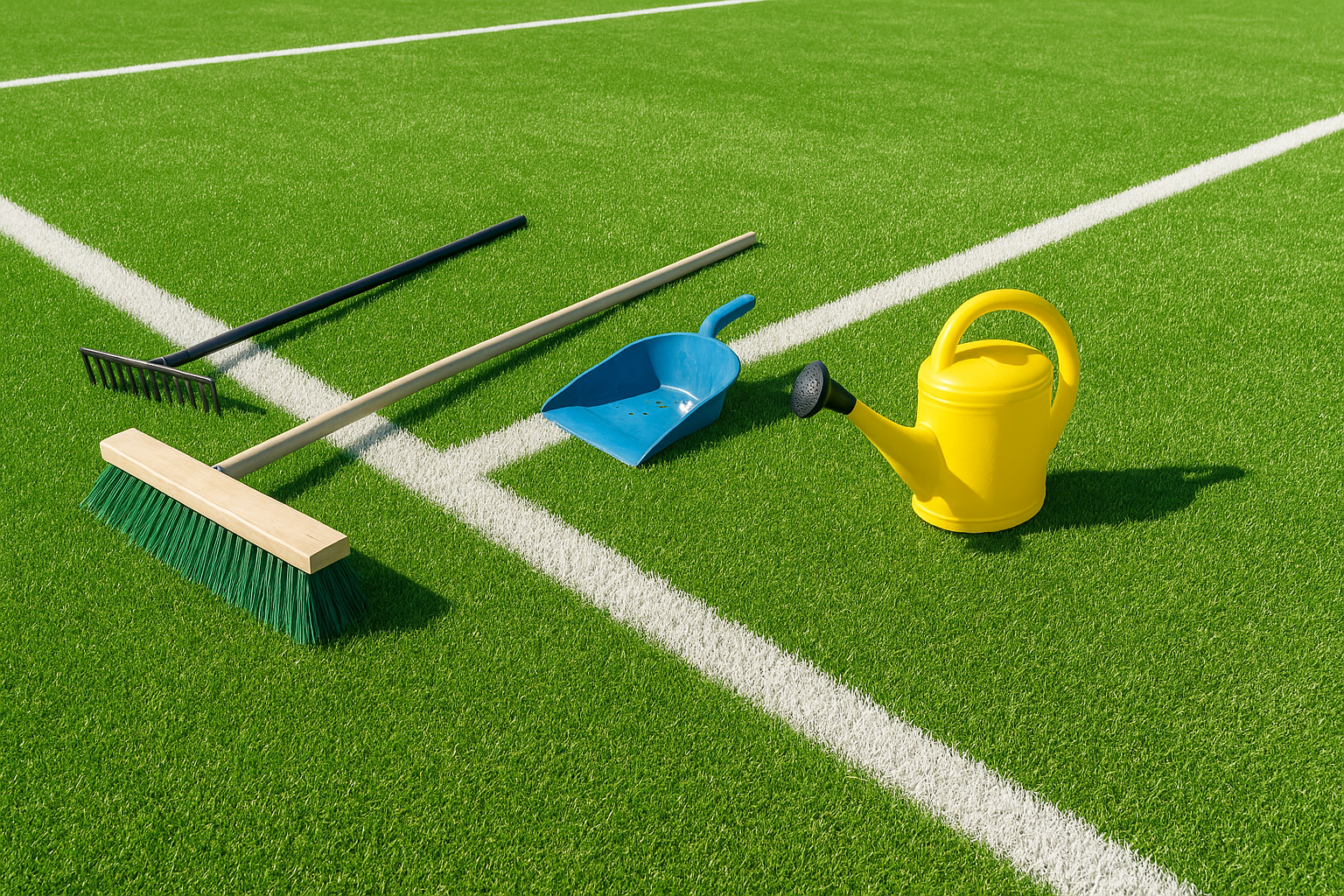
Equipment Ideal for Artificial Turf
- Soft-bristle brush
- Plastic rake
- Leaf blower
- Water hose
- Turf-safe cleaning solution
PFS Sport turf systems are compatible with mechanical groomers used in professional sports complexes.
Don’ts of Artificial Turf Maintenance
Several practices can damage Artificial Turf and shorten its lifespan. Avoiding these mistakes ensures the turf remains in excellent condition for years.
1. Don’t Use Sharp Tools
Sharp objects like metal rakes, knives, and spikes can tear fibers or puncture the backing. Turf repairs can be costly and time-consuming.
2. Don’t Allow Open Flames or Hot Items
Cigarettes, fireworks, or hot grill equipment can melt turf fibers instantly.
Heat Sensitivity
Artificial Turf fibers soften at high temperatures, so keep all heat sources at a safe distance.
3. Don’t Use Harsh Chemicals
Bleach, paint thinner, and solvents damage fibers and strip color.
Safe Alternatives
Use only turf-friendly cleaning products recommended by PFS Sport.
4. Don’t Ignore Weeds Along Edges
While weeds rarely grow through quality turf systems, they can sometimes appear along borders.
What to Do
Use mild, water-based weed control methods. Avoid harsh weed killers.
5. Don’t Drive Vehicles on the Turf
Heavy wheels compress infill and disturb drainage. Lightweight maintenance carts designed for turf use are acceptable, but regular vehicles are not.
6. Don’t Allow Heavy Furniture
Chairs, benches, and heavy sports equipment create dents and damage the turf consistency.
Alternative Options
Place lightweight, turf-safe furniture if necessary.
How PFS Sport Enhances Turf Durability
PFS Sport provides advanced Artificial Turf systems designed for long-term resilience. Their products include premium polyethylene fibers, UV-stabilized surfaces, drainage-optimized backing, and shock-absorption bases.
Key Advantages of PFS Sport Turf
- Reduced maintenance requirements
- High-density fibers that resist flattening
- Superior drainage for all-weather use
- Long-lasting color protection
- Comfortable and safe playing experience
Whether used in schools, clubs, football grounds, or multi-sport areas, PFS Sport ensures world-class quality with minimal upkeep.
Seasonal Maintenance Tips
Different seasons require tailored care to preserve turf performance. With weather changes, small adjustments keep your turf in perfect condition.
Summer Care
Heat and dust accumulation are common in hot months.
Tips
- Rinse the turf more frequently
- Avoid sharp or hot objects
- Brush twice a week for busy fields
Winter Care
Cold climates may bring frozen particles or snow.
Tips
- Avoid metal shovels during snow removal
- Let ice melt naturally
- Brush lightly to restore fiber consistency
Rainy Season Care
Most Artificial Turf systems drain well, but excessive water may cause clogging.
Tips
- Clean drainage channels
- Remove wet debris quickly
- Groom turf gently after rainfall
Professional Turf Maintenance with PFS Sport
Many facilities benefit from scheduled professional maintenance. PFS Sport offers expert services ensuring the turf stays compliant with international sports standards. Their team conducts infill inspection, deep cleaning, fiber reconditioning, and performance testing.
Conclusion
Artificial Turf is a long-term investment—one that delivers outstanding performance with the right maintenance. By following these do’s and don’ts, you ensure the surface remains safe, clean, and visually appealing for players of all ages. Regular brushing, debris removal, gentle cleaning, and proper infill care help maintain peak turf condition. Avoiding sharp tools, harsh chemicals, and heavy equipment also extends its lifespan. With reliable, high-quality turf systems from PFS Sport, maintaining your Artificial Turf becomes effortless and cost-effective.
Upgrade or maintain your turf with PFS Sport today — visit https://pfs.sport/