Artificial Turf vs Natural Grass: Which One is Better for Sports?

Every sports facility manager, coach, and athlete knows how vital a high-quality playing surface is for performance and safety.
In this guide, we’ll help you understand the key differences between artificial turf vs natural grass—from cost and maintenance to player experience and long-term benefits.
By the end, you’ll know exactly which surface is best for your sports field — and how PFS Sports (Polska Fabryka Sportów) can help you choose the perfect solution.
Understanding the Core Difference
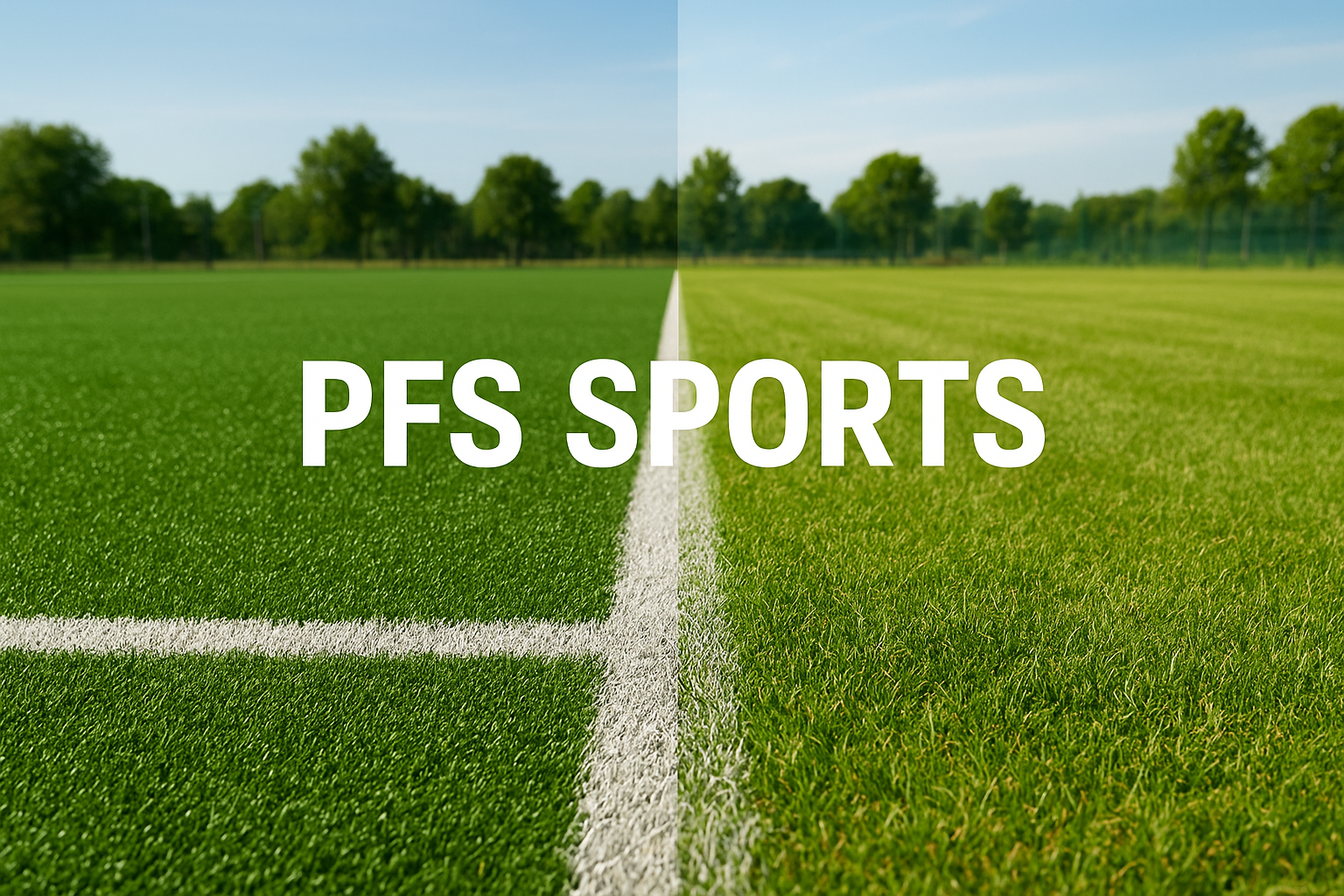
At first glance, artificial turf and natural grass may look similar, but their composition and performance vary significantly.
Natural grass is a living surface that requires sunlight, water, and care. On the other hand, artificial turf is a synthetic material made of durable fibers, rubber infill, and sand — designed to mimic natural grass while eliminating many of its maintenance challenges.
Advantages of Artificial Turf
1. All-Weather Playability
One of the biggest advantages of artificial turf is its ability to perform in any weather. Unlike natural grass, which becomes muddy or uneven after rain, synthetic turf provides a stable surface year-round.
PFS Sports offers high-performance artificial turf systems built with weather-resistant materials, ensuring uninterrupted play for sports like football, cricket, hockey, and multi-purpose fields.
2. Low Maintenance
Natural grass demands constant watering, mowing, fertilizing, and pest control. Artificial turf eliminates most of these tasks.
With minimal upkeep, you save significantly on water and labor costs — making it a more economical choice in the long run.
3. Durability and Longevity
Artificial turf from PFS Sports is engineered to withstand heavy foot traffic and frequent matches.
While natural grass wears down quickly in high-use areas, quality turf can last over 8–10 years with proper care — ensuring your field remains professional-looking season after season.
4. Sustainability Benefits
Modern artificial turf systems are designed with sustainability in mind. They reduce water usage and use recyclable materials in their base layers and fibers.
By choosing PFS Sports turf, you also contribute to eco-friendly sports development.
Advantages of Natural Grass
1. Natural Feel and Comfort
There’s no denying the sensory appeal of real grass — its cooling effect, natural cushioning, and smell create an authentic playing experience.
For sports like golf or baseball, the tactile feedback of natural grass is still unmatched.
2. Better Temperature Regulation
Artificial turf can become hot during summer, while natural grass maintains cooler surface temperatures.
However, innovations in PFS Sports turf systems — like cooling infills and UV-resistant fibers — have significantly reduced this gap.
3. Environmental Benefits
Natural grass absorbs carbon dioxide and releases oxygen, improving air quality. It also provides a natural ecosystem for soil organisms.
Still, maintaining it sustainably requires eco-conscious water and fertilizer management.
Comparing Key Factors
| Feature | Artificial Turf | Natural Grass |
|---|---|---|
| Initial Cost | Higher | Lower |
| Maintenance Cost | Low | High |
| Durability | 8–10 years | 2–4 years |
| Water Requirement | Minimal | High |
| Playability in All Seasons | Excellent | Limited |
| Eco-Friendliness | Recyclable materials | Natural ecosystem |
| Aesthetic Appeal | Consistent color | Can fade or patchy |
| Temperature Control | Warmer | Cooler |
Which One Should You Choose?
For Professional Sports Facilities
If you manage a professional field or stadium, artificial turf is often the smarter investment.
It guarantees uniform performance, durability, and reduced downtime — ideal for tournaments, training, and multi-sport use.
For Community or Recreational Fields
For smaller venues or community parks, natural grass may be suitable if you have the resources for maintenance and want a natural aesthetic.
PFS Sports offers both natural and synthetic surface solutions, helping clients balance performance, budget, and sustainability.
Why Choose PFS Sports for Artificial Turf Solutions
1. Premium Quality Materials
PFS Sports uses advanced fiber technology and UV-stabilized materials to produce turf systems that remain lush, vibrant, and durable for years.
2. Expert Installation Services
The company provides complete end-to-end installation — from base preparation to turf laying and finishing — ensuring precise, professional results every time.
3. Customizable Solutions
Each sports surface is tailored to your specific needs — whether it’s football, tennis, hockey, or multipurpose grounds.
PFS Sports ensures every project aligns with international quality and safety standards.
4. Global Expertise, Local Support
As a leader in sports infrastructure manufacturing, PFS Sports serves clients worldwide with trusted quality and reliable after-sales service.
The Future of Sports Surfaces
The future is moving toward hybrid systems that combine the best of both worlds — natural grass roots reinforced with synthetic fibers.
These advanced solutions offer the feel of grass with the resilience of turf.
PFS Sports continues to innovate in this space, developing next-generation sports surfaces that enhance player safety, comfort, and performance.
Conclusion
When it comes to artificial turf vs natural grass, the right choice depends on your facility’s goals, budget, and environmental priorities.
Artificial turf offers unmatched durability, minimal maintenance, and all-weather usability, while natural grass provides traditional charm and cooling comfort.
For reliable, high-performance sports surfaces, PFS Sports (Polska Fabryka Sportów) delivers world-class artificial turf systems designed for excellence and longevity.
👉 Visit https://pfs.sport/ to explore our premium sports infrastructure solutions and take your field to the next level!