Best Materials for Long-Lasting Padel Tennis Courts

Padel Tennis is taking the sports world by storm — combining the excitement of tennis with the strategy of squash. With courts popping up worldwide, choosing the right construction materials has never been more crucial.
If you want your padel court to last for years, perform flawlessly, and stay visually appealing, the secret lies in the materials used.
In this blog, we’ll explore the best materials for building long-lasting padel tennis courts, discuss their benefits, and show how PFS Sport leads the way in delivering world-class padel surfaces.
Why Quality Materials Matter in Padel Court Construction
Padel tennis courts endure constant play, exposure to sunlight, and weather changes. The materials used directly affect the court’s performance, lifespan, and safety. Poor-quality materials can lead to uneven bounce, wear and tear, and higher maintenance costs.
By investing in premium-grade materials from PFS Sport, court owners and facility managers ensure lasting durability, superior gameplay, and lower long-term expenses.
Core Components of a Padel Tennis Court
A standard padel tennis court includes multiple layers and materials that work together to create a safe and efficient playing surface. Let’s look at the essentials:
1. Structural Frame
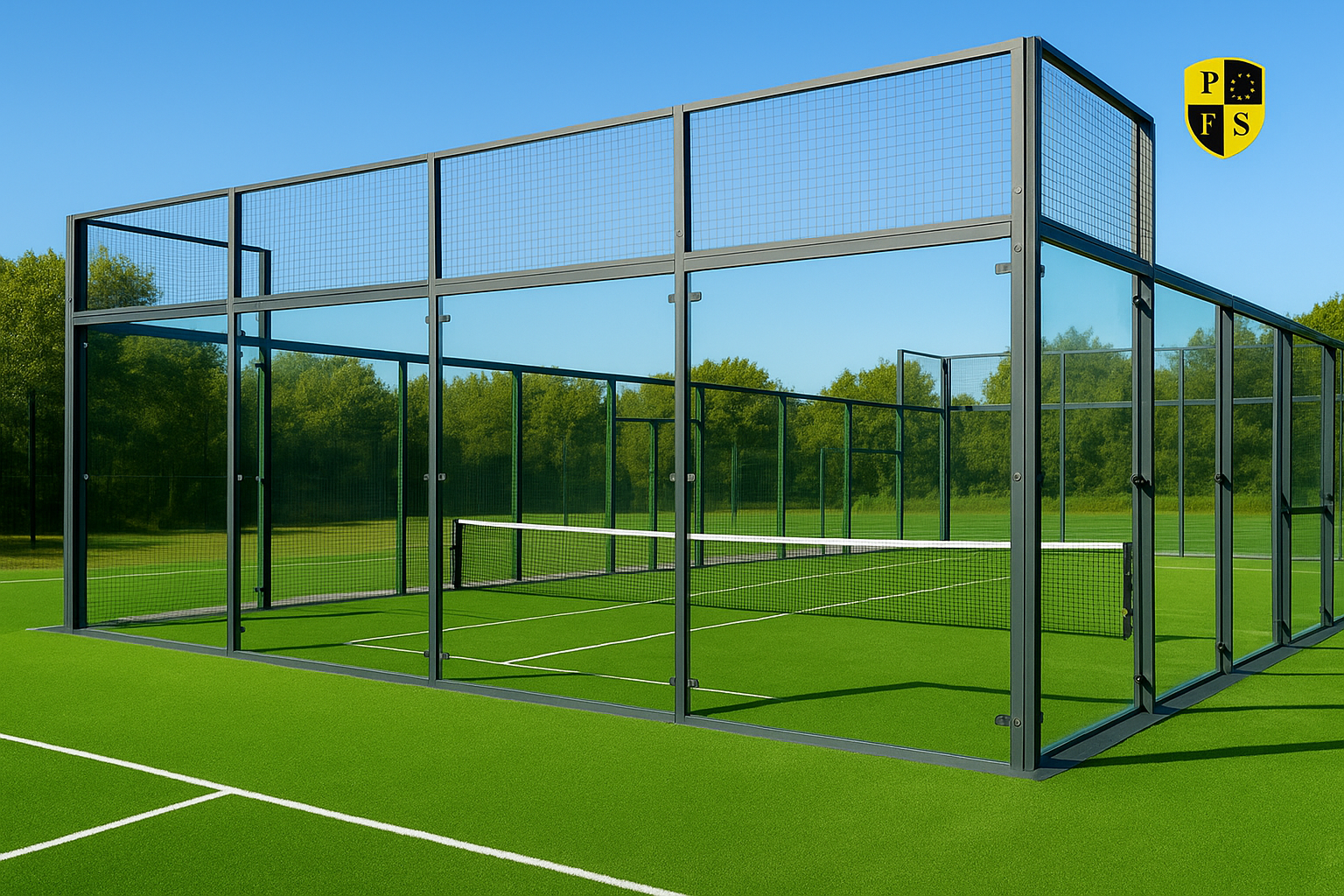
The court’s frame is usually made of galvanized steel. This material provides outstanding stability, corrosion resistance, and strength. A well-engineered steel frame prevents movement and ensures that the glass walls remain secure even during intense matches.
Why PFS Sport?
PFS Sport uses high-grade European steel treated with anti-rust coatings, ensuring each frame withstands humidity, rain, and temperature changes — perfect for both indoor and outdoor installations.
2. Tempered Glass Walls
Glass walls are a signature feature of padel tennis courts, allowing continuous play and a panoramic spectator view. The glass should be tempered and impact-resistant, with a minimum thickness of 10–12 mm.
Tempered glass ensures player safety and prevents shattering under impact. Its transparency also enhances visibility and aesthetics.
PFS Sport Advantage:
Every PFS Sport court uses certified tempered safety glass, precision-installed to meet international standards for padel court construction.
3. Artificial Turf Surface
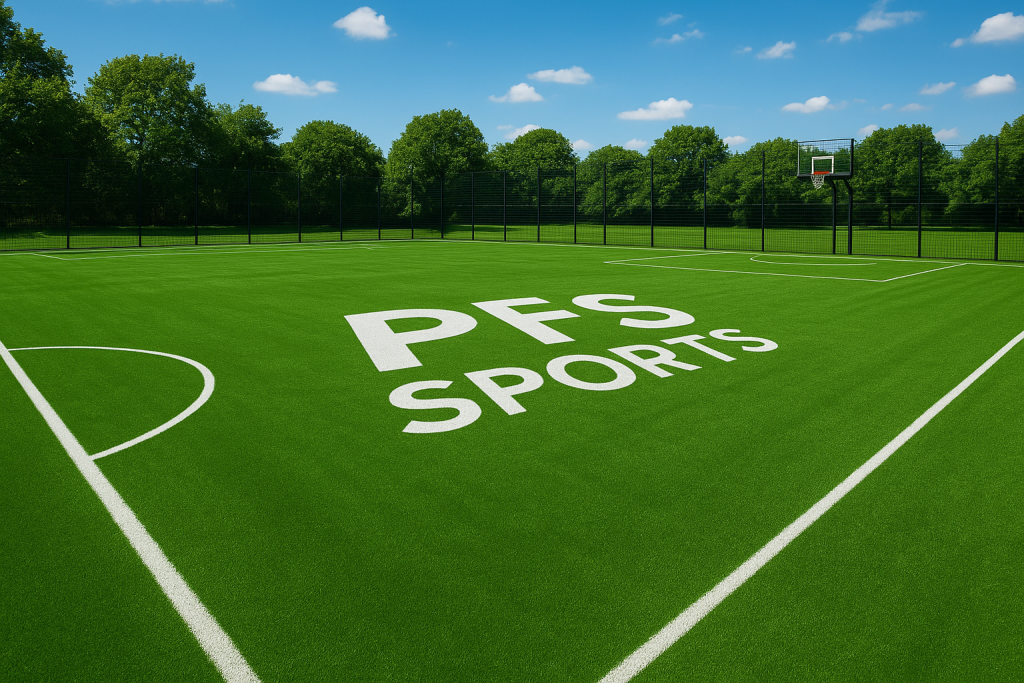
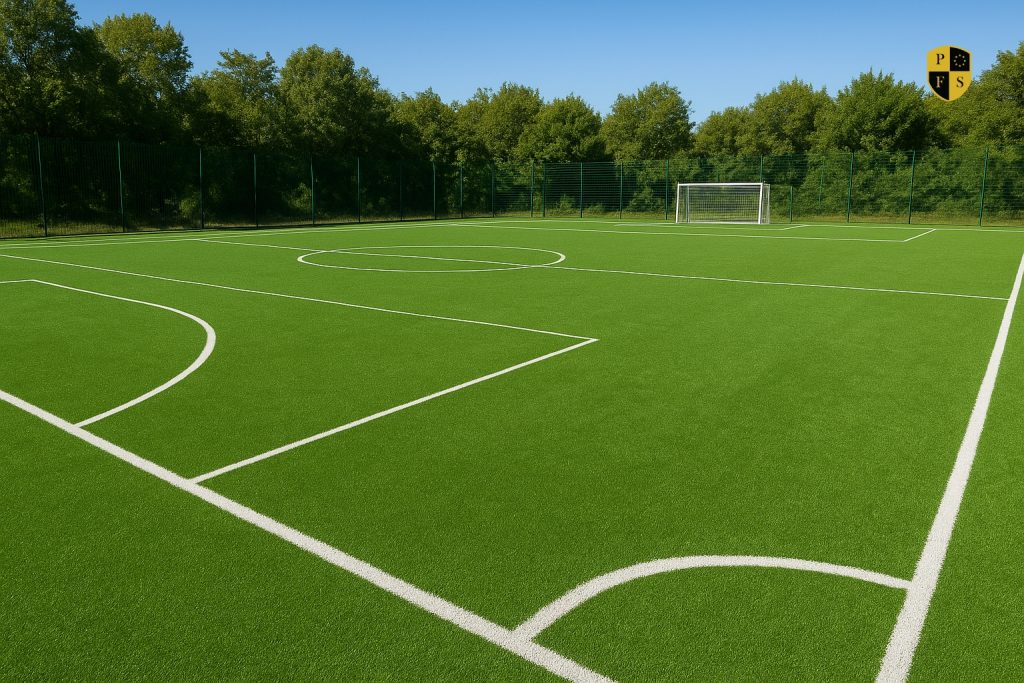
The playing surface is the heart of any padel court. Artificial turf is preferred over natural grass for its durability, low maintenance, and consistent bounce.
The best turf combines polyethylene (PE) and polypropylene (PP) fibers, offering a perfect blend of softness, grip, and shock absorption.
Why Choose PFS Sport Turf?
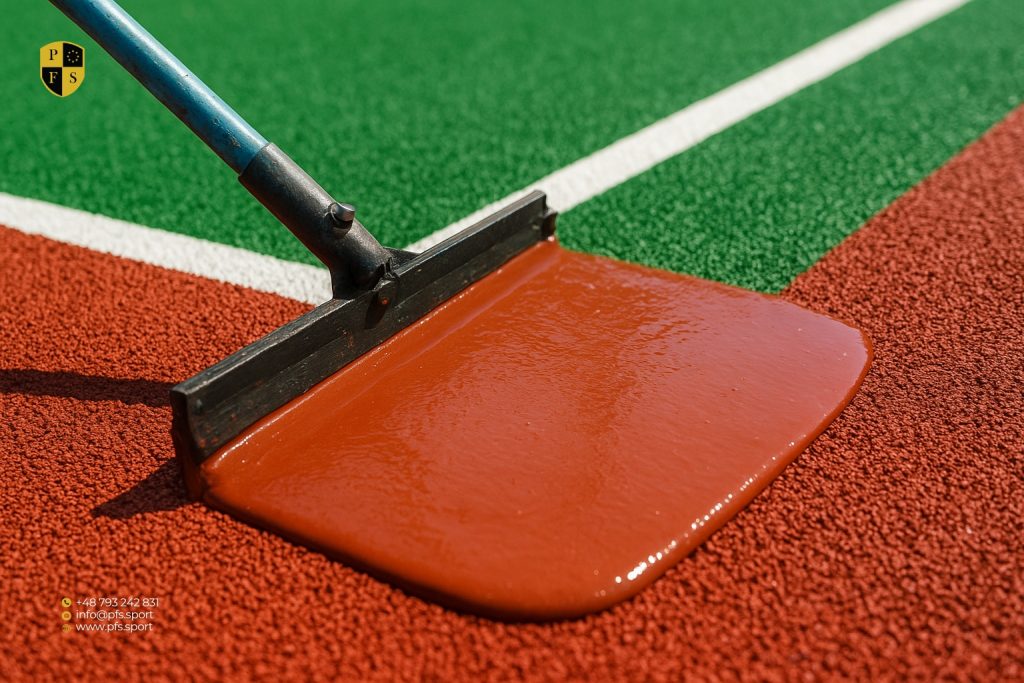
PFS Sport provides UV-resistant, non-slip turf available in multiple colors (green, blue, or clay red) to match facility aesthetics. Its dense pile and resilient infill deliver exceptional comfort and long-term playability.
4. Infill and Base Materials
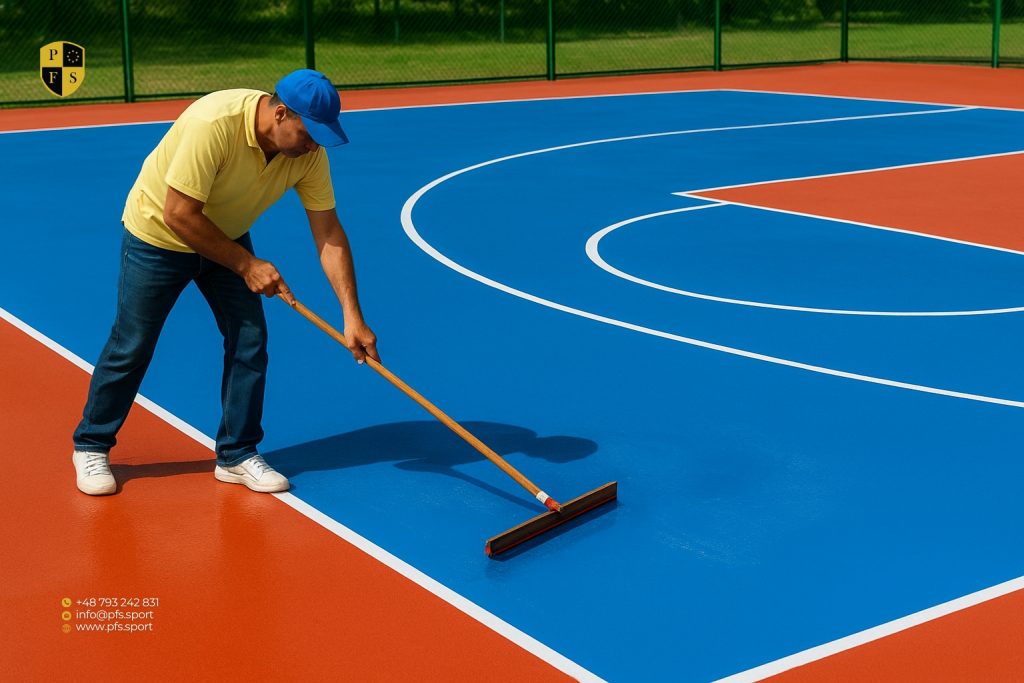
The infill layer — typically silica sand — keeps the turf stable and prevents fiber flattening. The base layer beneath the turf often consists of compacted crushed stone and polyurethane (PU) binder, which ensures drainage and surface stability.
PFS Sport Difference:
The company supplies high-quality PU Binders and EPDM granules that enhance the bond strength and flexibility of the base layer — critical for withstanding heavy use and weather changes.
5. Lighting System
Proper illumination is vital for evening matches. The best courts use energy-efficient LED floodlights that provide uniform lighting without glare.
PFS Sport LED Systems are designed for low power consumption and high luminosity, ensuring consistent visibility and safety during play.
6. Fencing and Net Systems
High-tensile wire fencing prevents the ball from leaving the court while maintaining visibility. The center net, made from polyester or nylon, divides the court and must be weather-resistant.
PFS Sport offers customized fencing and durable net systems to complement any padel court design.
How Material Quality Affects Court Longevity
Material selection is not just about appearance; it defines the court’s lifespan, performance, and maintenance requirements.
| Component | Low-Quality Material Outcome | High-Quality (PFS Sport) Outcome |
|---|---|---|
| Steel Frame | Rust and instability | Corrosion-free durability |
| Glass Walls | Risk of shattering | Safe, tempered glass |
| Turf | Flattening, poor traction | Long-lasting, resilient fibers |
| Infill/Base | Drainage issues | Stable, flexible surface |
| Lighting | Uneven illumination | Efficient, uniform lighting |
PFS Sport’s premium materials guarantee long-lasting performance even in high-traffic or outdoor facilities.
Benefits of Using PFS Sport Materials
1. European Quality Assurance
PFS Sport materials comply with European standards for safety, strength, and performance. Every component undergoes quality checks to ensure consistent results.
2. Tailored to Different Climates
Whether your court is in a humid coastal area or a cold mountainous region, PFS Sport materials adapt seamlessly. The company’s engineering ensures resistance to UV rays, moisture, and temperature variations.
3. Easy Maintenance and Longevity
Thanks to advanced coating and synthetic technology, PFS Sport courts require minimal upkeep. Surfaces stay cleaner longer, and parts like glass and turf retain their original look for years.
4. Sustainability Commitment
PFS Sport focuses on eco-friendly materials and energy-efficient systems, helping facility owners reduce environmental impact without compromising quality.
Step-by-Step Padel Court Construction with PFS Sport
Building a padel tennis court involves several precise steps, and each stage relies on premium materials:
- Site Preparation: Leveling, drainage setup, and ground compaction.
- Frame Installation: Anchoring galvanized steel posts.
- Glass Wall Setup: Fixing tempered glass panels securely.
- Flooring Installation: Laying artificial turf and applying infill evenly.
- Lighting & Accessories: Installing LED systems, fencing, and nets.
- Final Inspection: Ensuring compliance with International Padel Federation (FIP) standards.
Each phase is executed with PFS Sport’s world-class materials and technical expertise, ensuring unmatched durability and performance.
Common Mistakes to Avoid When Building Padel Courts
Even high-quality materials can fail if installed incorrectly. Avoid these pitfalls:
- Using low-grade or untested turf.
- Improper drainage design leading to water accumulation.
- Poor lighting layout causing shadows.
- Inadequate infill distribution reducing bounce quality.
- Ignoring safety certifications for glass and steel.
With PFS Sport’s turnkey solutions, you avoid these issues entirely — from design to installation.
Why Choose PFS Sport for Padel Tennis Courts
PFS Sport stands out as a trusted European manufacturer and supplier of complete padel court systems. The company’s focus on innovation, quality, and performance makes it the go-to choice for sports infrastructure developers worldwide.
Key reasons to partner with PFS Sport:
- In-house production and testing.
- Full installation support.
- Custom designs for indoor and outdoor courts.
- Long-term product warranties.
Conclusion
In the booming world of Padel Tennis, choosing the right materials determines whether your court will last a few years or decades. From galvanized steel frames and tempered glass to premium synthetic turf and LED lighting, every component plays a crucial role.
PFS Sport ensures that your Padel Tennis court combines performance, beauty, and durability — setting the benchmark for quality across Europe and beyond.
Ready to build your Padel Tennis court with the best materials?
👉 Visit PFS Sport (Polska Fabryka Sportów) and explore world-class padel court solutions today!