Outdoor Running Tracks in Texas: Complete Construction & Performance Guide


Texas weather is intense and unpredictable. Scorching heat, sudden storms, and heavy usage challenge sports infrastructure daily. Therefore, building durable outdoor running tracks requires careful planning and expert materials.
In this guide, you will learn how to design, construct, and maintain high-performance outdoor running tracks built for Texas conditions.
We will explore surface types, construction steps, safety standards, maintenance practices, and why PFS Sports delivers reliable track systems across Texas.
Why Outdoor Running Tracks Are Growing in Texas
Texas schools, colleges, and communities invest heavily in athletics. Track and field programs continue to expand statewide.
As a result, demand for professional outdoor running tracks has increased. Facilities now prioritize durability, athlete safety, and long-term value.
PFS Sports supports this growth by delivering advanced track systems designed for year-round performance.
Climate Challenges for Outdoor Running Tracks in Texas
Extreme Heat and UV Exposure
Summer temperatures often exceed 100°F. Surfaces must resist cracking and fading.
High-quality outdoor running tracks use UV-stable synthetic layers. These materials maintain elasticity under heat stress.
Heavy Rain and Drainage Issues
Texas storms arrive suddenly. Poor drainage can damage the base layer.
Therefore, proper slope and water management systems protect outdoor running tracks from pooling and erosion.
Temperature Fluctuations
Seasonal shifts cause expansion and contraction. Flexible polyurethane surfaces adapt effectively.
PFS Sports installs track systems engineered to withstand these changes.
Types of Outdoor Running Tracks
Polyurethane Track Systems
Polyurethane is the most common material for outdoor running tracks. It offers durability, resilience, and strong traction.
Athletes benefit from consistent grip and reduced impact stress.
Sandwich System Tracks
This system combines rubber granules with a polyurethane topcoat.
It provides excellent shock absorption while maintaining speed performance.
Full Pour Track Systems
Full pour systems deliver maximum durability and elite-level performance.
Professional stadiums often choose this option for competitive events.
PFS Sports customizes each track system according to facility needs.
Standard Dimensions for Outdoor Running Tracks
A standard track measures 400 meters in lane one.
Typically, tracks feature six to eight lanes. Lane width usually measures 1.22 meters.
Proper markings ensure compliance with athletic standards. Accurate layout improves athlete performance and safety.
Step-by-Step Construction Process
Site Assessment and Soil Testing
Engineers evaluate soil stability and drainage conditions.
This step prevents foundation failure and long-term damage.
Base Preparation
Contractors install a compacted stone sub-base.
Next, they pour asphalt or concrete as the structural layer.
A strong base supports long-lasting outdoor running tracks.
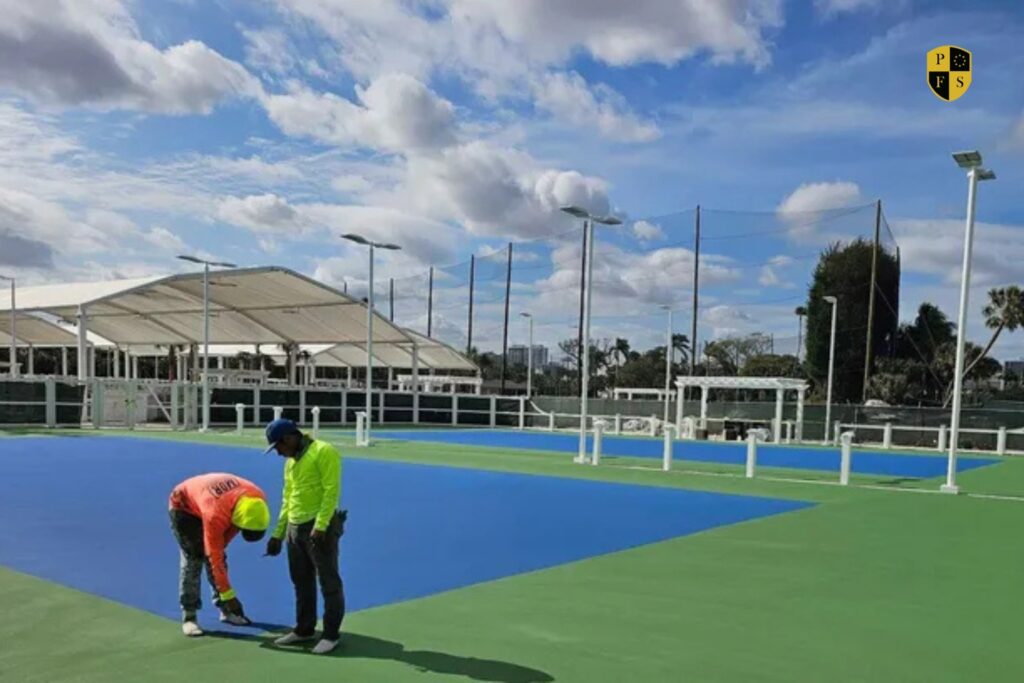
Surface Installation
Workers apply rubber granules and polyurethane layers.
Each layer cures properly before the next is added.
This process ensures consistent thickness and durability.
Line Marking and Finishing
Professionals apply lane markings and event indicators.
Precision painting guarantees accurate measurements.
PFS Sports completes each project with strict quality control.
Safety Standards for Outdoor Running Tracks
Athlete safety remains the top priority.
Shock absorption reduces joint stress during sprinting.
Slip-resistant surfaces improve traction in wet conditions.
Therefore, professional outdoor running tracks must meet performance and safety standards.
PFS Sports follows international guidelines during every installation.
Benefits of Professional Outdoor Running Tracks
Enhanced Athlete Performance
Quality surfaces provide consistent energy return.
Runners achieve better speed and endurance on optimized tracks.
Reduced Injury Risk
Proper cushioning lowers impact stress.
Athletes train more confidently on stable outdoor running tracks.
Long-Term Durability
Professional systems resist cracking and wear.
With proper care, tracks last 8–15 years before resurfacing.
Cost of Outdoor Running Tracks in Texas
Average Investment Range
Costs vary based on size and system type.
Most outdoor running tracks range from $400,000 to $1,200,000.
Factors Influencing Cost
Surface type, base preparation, drainage, and lighting affect pricing.
PFS Sports provides transparent quotes tailored to Texas facilities.
Maintenance Tips for Outdoor Running Tracks
Regular Cleaning
Remove debris weekly to protect the surface.
Dust accumulation can reduce traction.
Annual Inspection
Inspect for cracks, bubbles, or drainage issues.
Early repairs prevent expensive reconstruction.
Resurfacing Schedule
Resurfacing restores grip and appearance.
Most outdoor running tracks require resurfacing every 8–10 years.
Outdoor Running Tracks for Schools and Communities
High Schools
Texas high schools rely heavily on track programs.
Durable surfaces support daily practice and competitions.
Colleges and Universities
Collegiate facilities require advanced performance standards.
PFS Sports installs competition-grade outdoor running tracks for higher education.
Community Sports Complexes
Public parks and recreation centers promote fitness.
Well-built tracks encourage community engagement and healthy living.
Sustainability in Modern Track Construction
Eco-friendly materials reduce environmental impact.
Recycled rubber components improve sustainability.
PFS Sports integrates responsible construction practices wherever possible.
Why Choose PFS Sports for Outdoor Running Tracks
Expertise and Experience
PFS Sports specializes in sports infrastructure solutions.
Their team understands Texas climate challenges.
Custom Design Solutions
Each facility has unique requirements.
PFS Sports offers customized outdoor running tracks for schools, colleges, and sports complexes.
End-to-End Project Support
From planning to maintenance guidance, PFS Sports supports clients fully.
This partnership ensures long-term performance and value.
Future Trends in Outdoor Running Tracks
Technology continues to improve surface performance.
Modern outdoor running tracks focus on higher energy return and improved drainage.
Additionally, facilities now prioritize sustainability and multi-sport adaptability.
PFS Sports stays ahead by integrating innovation into every project.
Conclusion
Outdoor running tracks in Texas must withstand intense heat, sudden storms, and heavy athletic use. Therefore, choosing the right surface system and expert installation is essential.
With advanced polyurethane systems, durable base construction, and precise installation methods, PFS Sports delivers reliable outdoor running tracks tailored for Texas facilities. Their expertise ensures safety, durability, and high-level performance.
If you are planning a new athletic facility or upgrading an existing one, trust the specialists at PFS Sports.
👉 Build world-class outdoor running tracks today with PFS Sports
🔗 https://www.pfs.sport